
Qatar has long positioned itself as the bedrock of global energy security. For decades, the tiny Gulf nation has cultivated an image of absolute reliability, marketing its liquefied natural gas (LNG) as the stable alternative to more volatile energy sources. However, recent escalations in the region, punctuated by a significant Iranian drone strike, have begun to tarnish that carefully maintained veneer of safety.
A Legacy of Reliability Under Pressure
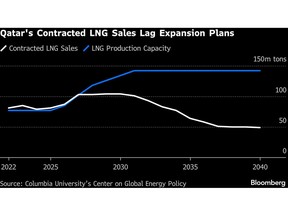
The incredibly wealthy nation has built its entire economic strategy around being the powerhouse producer that never misses a shipment. In a world where pipeline politics and civil unrest often disrupt supply chains, Qatar stood apart. Its ability to navigate previous regional blockades without halting a single delivery earned it a unique level of trust from major importers in Asia and Europe. This reputation for resilience allowed it to secure massive contracts spanning many decades, which in turn underpin its significant influence on the global stage.
Yet, the physical security of the energy infrastructure is now under the microscope. The drone attack signals a shift in the risk calculus for international buyers. While Qatar has historically balanced its relationship with its powerful neighbour, Iran, the reality of shared gas fields and narrow shipping lanes means that any regional flare up directly threatens Qatari exports. I think this signals a turning point for global buyers who once viewed the Gulf as a sanctuary of stability. The centre of this crisis lies in the proximity of Qatar’s production facilities to Iranian military capabilities.
Vulnerability in the Strait of Hormuz
The geographical bottleneck of the Strait of Hormuz remains the primary concern for those who analyse energy markets. Almost all of Qatar’s LNG must pass through this narrow waterway, which is frequently a flashpoint for maritime confrontations. An Iranian drone strike within this context demonstrates that even the most sophisticated defence systems cannot fully guarantee the safety of the massive tankers that ferry gas to the world.
Market experts are now forced to reevaluate the safety premium traditionally associated with Qatari gas. If the region becomes a theatre of active conflict, the physical delivery of gas becomes a gamble rather than a guarantee. This development comes at a sensitive time, as many nations are looking to diversify away from Russian energy and are searching for long term partners they can trust implicitly. Qatar has long been a favourite of European energy ministers, but the geopolitical colour of the region is changing.
The dent in Qatar’s reputation does not mean its dominance is ending, but it does introduce a new era of caution. Buyers are increasingly looking at North American and Australian alternatives to spread their risk. For a nation that holds the metaphorical licence to provide stability to the world’s power grids, the shadow cast by Iranian military activity is a significant challenge. The honour of being the world’s safest energy bet is currently at stake as the geopolitical situation continues to evolve.