
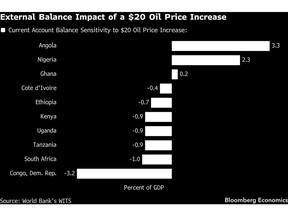
The international energy landscape is currently navigating a period of significant volatility as crude prices stabilize around the $85 mark. This price movement, largely a reaction to the escalating geopolitical friction following the US and Israel’s war on Iran, is creating a stark divide among sub-Saharan African nations. While a small handful of countries will see their fiscal positions strengthen, the vast majority of the region faces a daunting economic challenge.
Winners and Losers in the Energy Shift
The impact of $85 oil is not felt equally across the continent. According to recent data and analysis from Bloomberg Economics, only three sub-Saharan African economies are expected to see an improvement in their current account balances as a result of this price surge. Nigeria stands out as the most prominent winner in this scenario. As a major crude producer, the increased revenue from exports provides a much needed buffer for its national treasury; this allows the government to potentially address domestic infrastructure or debt concerns that have long plagued the federal budget.
Conversely, the outlook for other nations is far more grim. The Republic of Congo is highlighted as the nation with the most to lose. For Congo and many of its neighbouring countries, the high cost of energy imports often outweighs any benefits derived from small scale production or resource extraction. I think this signals a dangerous period for regional stability, as the increased costs of fuel and transportation can quickly lead to domestic inflation and public discontent.
The Weight of Geopolitical Tension
The root of this price spike lies far from the African coast, yet the consequences are deeply localized. The ongoing tensions involving the United States, Israel, and Iran have introduced a significant risk premium into global oil markets. For sub-Saharan Africa, which is already grappling with the lingering effects of global inflation and supply chain disruptions, this external shock is particularly ill timed.
Most economies in the region are net importers of refined petroleum products. Even those with significant crude reserves often lack the refining capacity to meet domestic demand; consequently, they must export crude at a profit but import fuel at a loss. This structural imbalance ensures that when prices rise, the majority of the population feels the pinch at the petrol pump.
As these countries attempt to analyse their budgetary requirements for the coming year, the pressure to maintain any existing fuel subsidy programme will likely increase. However, with national labour costs and debts rising, the ability to fund such protections is limited. The result is a widening gap between oil rich exporters like Nigeria and the rest of the sub-Saharan region, where the energy crisis threatens to stall growth and deepen existing financial vulnerabilities. The economic centre of gravity is shifting, leaving those without significant export power in a precarious position.