
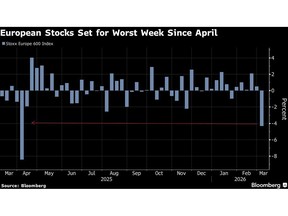
The financial landscape across Europe has taken a sombre turn this week as major indices grapple with a significant selloff. Investors have watched with growing unease as European shares head toward their worst weekly performance since April. This downward trend is a direct reflection of the heightened tensions and the continuing war in Iran, a conflict that currently shows no signs of reaching a diplomatic or military resolution.
As the week progressed, the optimism that once buoyed the markets during the early summer months began to evaporate. The uncertainty surrounding the Middle East has cast a long shadow over trading floors from London to Frankfurt. Financial experts suggest that the persistence of the fighting has forced many to re-evaluate their portfolios. The lack of a clear timeline for peace has turned what some hoped would be a temporary market tremor into a sustained decline.
The Repercussions of Persistent Conflict
The impact of the war is being felt most acutely in sectors sensitive to global stability and energy costs. When a major regional power is involved in a kinetic conflict, the ripple effects are felt throughout the international supply chain. European markets, which are closely tied to global trade routes and energy imports, are particularly vulnerable. The current downturn highlights a broader fear that a prolonged war will lead to increased volatility in commodity prices and a general slowdown in economic activity across the continent.
I think this signals a fundamental shift in how traders are pricing in regional instability, as the initial shock of the war has transitioned into a weary realization that the situation may be permanent for the foreseeable future. This sentiment has led to a retreat from riskier assets. Instead, there is a visible move toward more stable investments as a means of defence against further market erosion. The collective desire to protect capital has outweighed the appetite for growth, leading to the significant percentage drops observed in major European benchmarks.
Market Sentiment and Economic Uncertainty
While some analysts had hoped for a midweek recovery, the reality on the ground in the Middle East has dictated a different path for the markets. Each day that passes without a sign of a ceasefire or a de-escalation of hostilities adds another layer of complexity to the economic outlook. In many financial centres, the conversation has moved away from corporate earnings and toward the geopolitical licence required to operate in an increasingly fractured world.
The situation remains fluid, yet the trend for the week is undeniably negative. For many Canadian investors with exposure to European equities, this decline serves as a reminder of the interconnected nature of modern finance. The honour of maintaining a stable market often falls to the ability of nations to resolve disputes through dialogue rather than force. Without such a resolution, the path for European stocks remains clouded by the smoke of a war that refuses to end. Market participants will likely continue to analyse the daily updates from the region, searching for any glimmer of hope that might reverse this troubling weekly trend. For now, however, caution remains the primary strategy.