
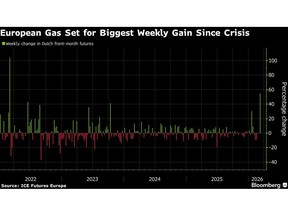
European natural gas prices are currently experiencing a period of intense upward pressure, positioning the market for its most significant weekly gain since the peak of the energy crisis. This dramatic shift represents a return to the high levels of volatility that defined the economic landscape of the continent during recent years. As the week progresses, traders and policymakers alike are watching the benchmarks with growing concern, noting that the relative stability of the past few months has been abruptly shattered.
Geopolitical Tensions Fuel Market Uncertainty
The driving force behind this sudden escalation is the continuing war in the Middle East, a situation that has cast a shadow over the future of global energy flows. While the conflict is geographically removed from the pipelines of Northern Europe, the interconnected nature of the global liquefied natural gas market means that any threat to Middle Eastern stability vibrates through the entire system. Investors are particularly worried about the potential for regional disruptions that could hinder the transit of energy through key maritime corridors.
I think this signals a renewed period of fragility for global markets, where political developments are once again superseding the basic principles of supply and demand. The current price action reflects a fear premium that has been absent for some time, as participants attempt to analyse the long term implications of a prolonged conflict. If the situation in the Middle East does not find a path toward de escalation, the premium placed on these energy contracts may continue to grow, putting further strain on industrial sectors that rely heavily on affordable fuel.
Implications for Global Energy Security
The timing of this price surge is especially difficult as the Northern Hemisphere prepares to enter the winter season. Although many European nations have made significant strides to organise their storage facilities, the prospect of a supply crunch remains a potent threat. The current volatility serves as a reminder that the energy transition is a complex process, one that is often interrupted by the realities of international relations and the defence of national interests.
In the coming days, the focus will likely remain on whether these price increases are a temporary reaction or the beginning of a sustained upward trend. Market participants will be looking for any indication of how global flows will be redirected or if alternative suppliers can step in to mitigate the risks associated with the Middle East. For the moment, the outlook remains clouded by the fog of war, leaving the energy sector in a state of high alert. This week’s gains are not just numbers on a screen; they represent a potential shift in the economic cost of living for millions of people across the globe. Consequently, the ability of nations to maintain a centre of stability in their energy policies will be tested.