

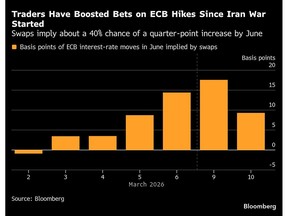
The escalating conflict in Iran is casting a shadow over the Eurozone’s economic outlook, with a prominent European Central Bank official suggesting it could force the bank’s hand on interest rates sooner than anticipated. Peter Kazimir, a member of the ECB’s Governing Council, has indicated that the geopolitical instability, especially its impact on inflation, is a primary concern.
Geopolitical Tensions Fuel Inflation Fears
The war in Iran is cited as a significant driver of inflation risks for the Eurozone economy. This conflict has the potential to disrupt global energy supplies and further strain already fragile supply chains, both of which are crucial factors in the current inflationary environment. For countries heavily reliant on imported energy, such as many in Europe, geopolitical flashpoints can lead to sharp price increases, directly impacting household budgets and business costs. Kazimir’s remarks suggest that the ECB is not only contemplating the usual economic indicators but also factoring in the unpredictable fallout from international conflicts. This approach reflects a broader trend among central banks worldwide to acknowledge and attempt to mitigate the effects of geopolitical events on price stability.
A Potential Shift in Monetary Policy
The implication of Kazimir’s statement is that the European Central Bank might need to adjust its monetary policy sooner rather than later. Traditionally, central banks signal their intentions well in advance, allowing markets and consumers to prepare for changes in borrowing costs. However, the volatile nature of the current global situation, particularly the ongoing war in Iran, introduces a degree of uncertainty that could necessitate a more rapid response. If inflation continues to climb due to these external pressures, the ECB may find itself compelled to raise interest rates to cool down the economy and bring inflation back under its target. This would mark a departure from a potentially more gradual approach, underscoring the seriousness with which the bank views the current economic headwinds. I believe this signals a heightened awareness of the interconnectedness of global events and their direct impact on domestic economic stability.
The European Central Bank, like its counterparts in Canada and elsewhere, faces the delicate balancing act of controlling inflation without stifling economic growth. Interest rate hikes are a powerful tool for curbing inflation, but they also make borrowing more expensive, which can slow down investment and consumer spending. Therefore, any decision to raise rates would be made after careful consideration of the potential consequences. Analysts will be closely scrutinizing subsequent statements from ECB officials and economic data releases for further clues on the bank’s thinking. The coming months will be critical in determining whether the current geopolitical landscape indeed accelerates the path towards higher interest rates in the Eurozone.
Source: ECB Hike Potentially Closer Than Thought on Iran, Kazimir Says