
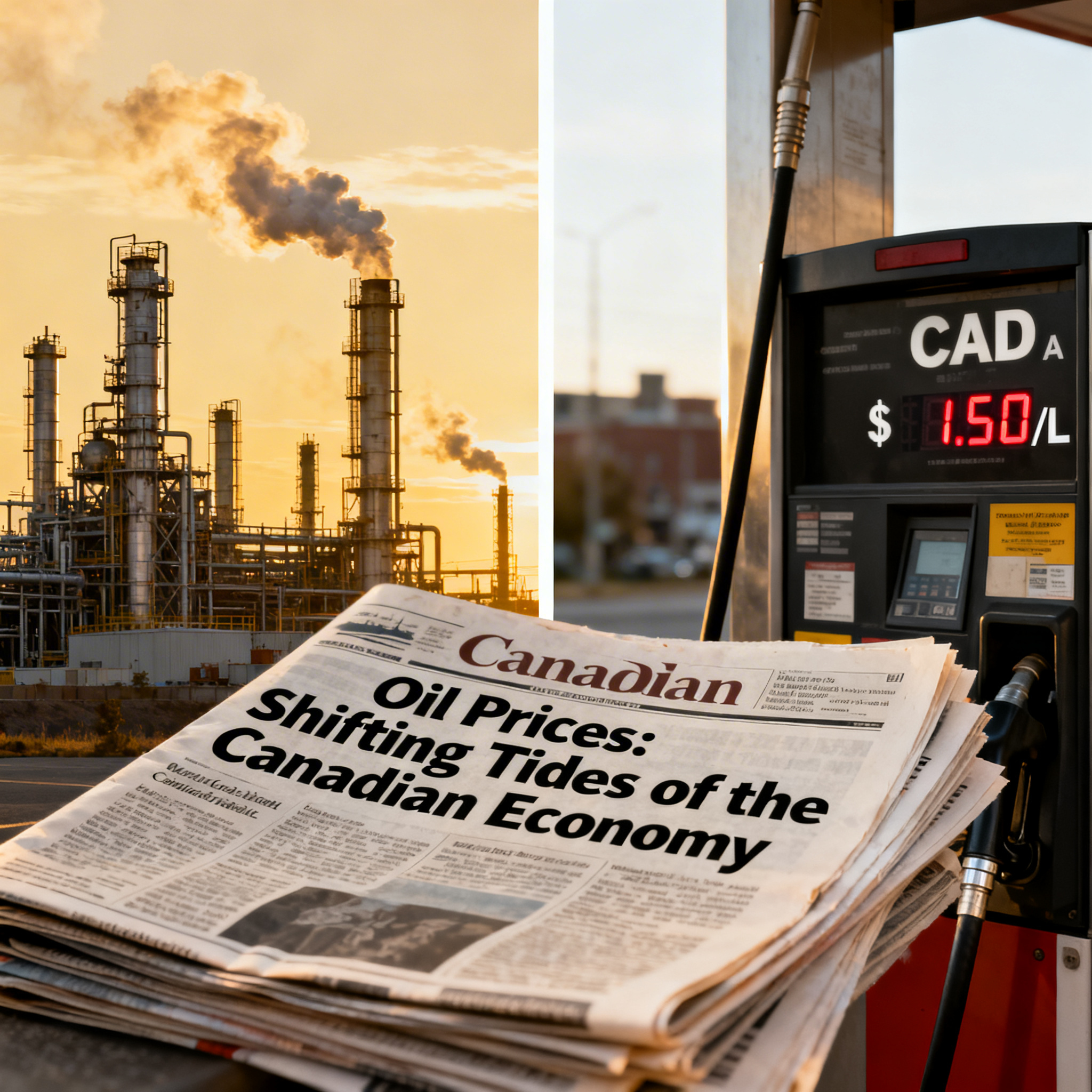
The news lately has been a familiar, if unsettling, tune. Oil prices are climbing, not just nudging up, but surging. Reports paint a picture of prices at $85 a barrel, a significant jump, fuelled by escalating tensions in the Middle East. This isn’t just abstract economic data; it’s a global tremor that sends ripples right back to our Canadian doorsteps. And as I read these articles, I can’t help but feel a familiar sense of Canadian ambivalence. We are, after all, a nation deeply intertwined with the oil industry, yet the immediate effects of these price hikes are rarely straightforwardly positive for the average citizen.
The Global Divide Widens
What strikes me most is the emerging economic divide this price surge is creating. We see headlines like “Oil at $85 Makes Nigeria a Winner, While Congo Has Most to Lose.” It’s a stark reminder that in the complex world of global commodities, a rising tide doesn’t lift all boats equally. Nigeria, a major oil exporter, stands to benefit significantly from these higher prices. Conversely, countries that import much of their energy, and lack substantial domestic production, face immense financial strain. This is a geopolitical game of winners and losers played out on a grand scale, and it underscores the inherent volatility and inequality in the international energy market.
And then there’s the sheer speed of the disruption. The mention of a “17 percent weekly gain” driven by “Mideast War” is particularly alarming. This isn’t a gradual shift; it’s a shock to the system. It highlights how fragile global supply chains can be, and how quickly geopolitical events can translate into tangible economic consequences for all of us. Even former administrations, like the Trump team, are reportedly downplaying their Treasury Department’s involvement in oil futures trades as prices surge. This suggests a recognition, however guarded, of the sensitive nature of market intervention during such turbulent times.
Canada’s Own Oil Equation
So, where does this leave us, here in the Great White North? For many Canadians, particularly those in oil-producing provinces like Alberta, higher oil prices can mean increased revenue for the sector, more jobs, and greater economic activity. It’s a boost for our national resource-based economy. I can imagine the sense of relief in Calgary and Edmonton, a welcome counterpoint to the years of economic uncertainty they’ve faced.
However, for the rest of us, especially in central and eastern Canada, and for households across the country, this surge often translates to higher gasoline prices at the pump. My neighbour, who commutes daily to her job in downtown Toronto, recently lamented the rising cost of filling up her car. This directly impacts household budgets, making everyday life more expensive. It affects the cost of goods, as transportation expenses climb, and can lead to broader inflationary pressures. The economic gains for the oil sector, while real, can be offset by the pinch felt by consumers.
This brings us to a fundamental Canadian paradox. We are a major oil producer, yet we grapple with the environmental imperative to transition away from fossil fuels. Higher prices might, on one hand, make investments in cleaner energy sources more competitive. On the other hand, they can also create a powerful incentive to continue extracting and exporting oil, potentially slowing down the transition we know is necessary. Our federal and provincial governments face the unenviable task of balancing immediate economic needs with long-term climate goals. How do we encourage innovation in green technologies when traditional fossil fuels suddenly become so lucrative?
Navigating the Storm Ahead
The current global oil price situation is a complex web of geopolitical instability and economic reality. It’s a stark reminder that Canada cannot operate in an energy vacuum. The decisions made in far-flung corners of the world have direct and often significant consequences for our economy and our everyday lives.
As a columnist for Fine Times Canada, I believe we need to have an honest conversation about our energy future. This isn’t about picking sides or assigning blame. It’s about understanding the realities of the global market, acknowledging the impact on different regions and households within our own country, and developing thoughtful, made-in-Canada policies that promote energy security while also accelerating our progress towards a sustainable future. We need to be agile, adaptable, and committed to finding solutions that benefit all Canadians, not just a select few. This volatile oil market is a call to action, a prompt to ensure our own energy defence is robust, adaptable, and aligned with our nation’s long-term vision.