
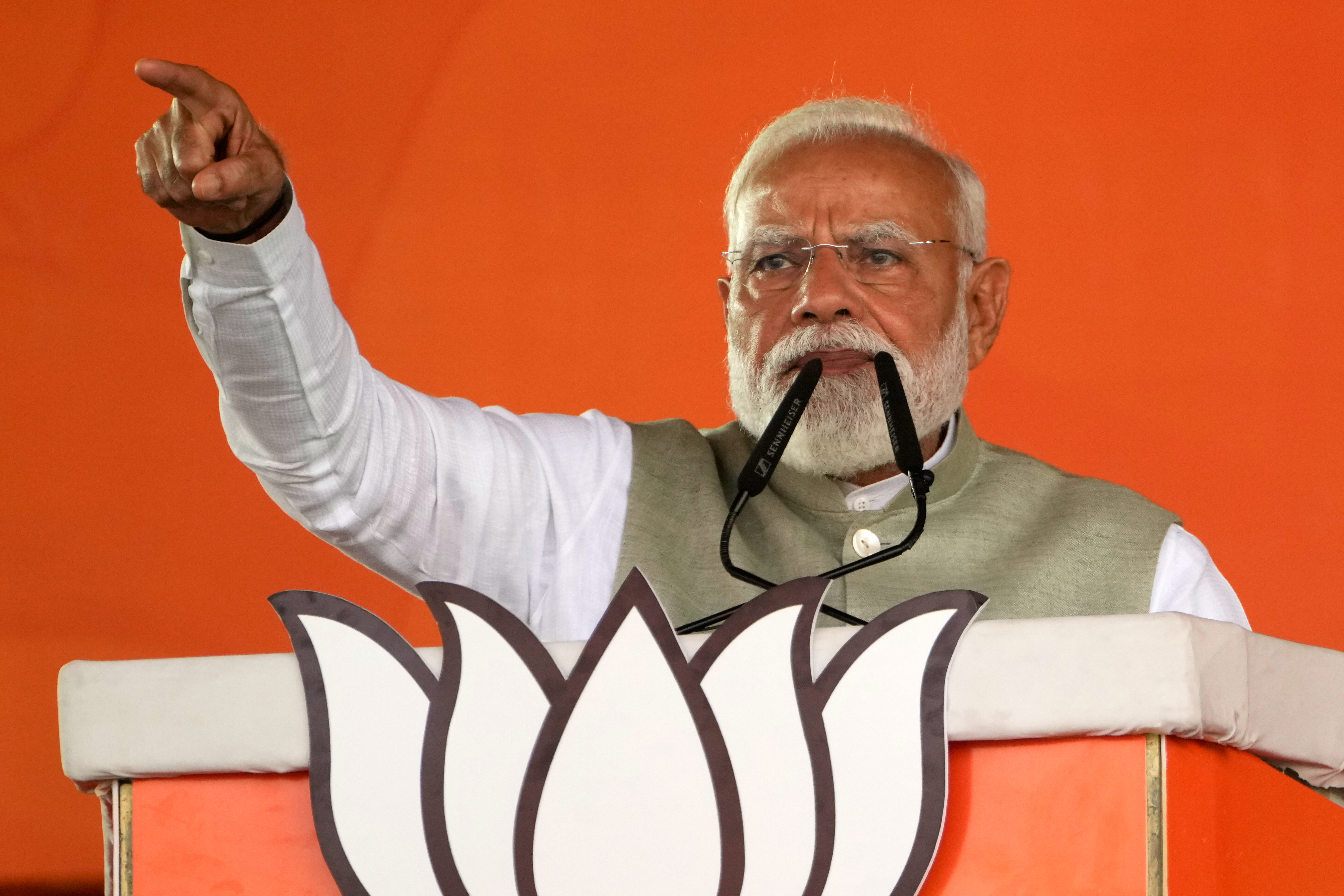
Prime Minister Narendra Modi’s government has experienced a significant setback in its ambitious plan to redraw India’s electoral map. The initiative, which was closely tied to a proposal for greater women’s representation in the country’s legislature, has been met with strong resistance from opposition parties, effectively stalling the redistricting effort.
The contentious element of the plan was its integration with the creation of reserved seats for women. While the goal of enhancing female participation in politics garnered widespread approval in principle, the mechanism proposed for achieving it proved to be a major point of contention. Opposition parties argued that the timing and the broader implications of redrawing electoral boundaries were politically motivated, designed to favour Modi’s Bharatiya Janata Party (BJP) in future elections.
Boundary Redrawing Meets Fierce Opposition
The process of redrawing India’s electoral map, known as delimitation, is a constitutionally mandated exercise undertaken periodically to ensure that constituencies are of roughly equal population size. However, any such exercise is inherently sensitive, as it can alter the political fortunes of parties and sitting politicians by shifting boundaries and creating new constituencies. The government’s proposal to link this sensitive delimitation process with the reservation of seats for women proved to be a particularly thorny issue.
Sources indicate that the opposition’s apprehension stemmed from the belief that the government intended to use the redrawing of boundaries to solidify its political advantage. While the intention to increase women’s representation in Parliament and state assemblies is a stated goal, the specific approach taken by the government raised concerns about potential manipulation. This has led to a deadlock, with the government unable to proceed with its plan without broader consensus.
The Sticking Point: Women’s Reservation and Redistricting
The government’s proposal to reserve one-third of seats for women in the Lok Sabha (the lower house of Parliament) and state legislative assemblies was presented as a progressive step. However, the crucial detail that caused the plan to falter was the condition that these reservations would only come into effect after a new delimitation exercise. This means that the existing constituency boundaries would need to be redrawn before the women’s reservation could be implemented.
Opposition parties, including the Indian National Congress and various regional blocs, voiced their concerns loudly. They argued that undertaking a delimitation exercise at this juncture, while the government holds a strong majority, could be exploited to redraw boundaries in a way that benefits the ruling party. This has created a significant political impasse, leaving the future of both the redistricting plan and the enhanced women’s reservation in limbo. For now, it appears Prime Minister Modi’s bid to reshape the electoral landscape in line with his party’s favour has been temporarily thwarted by these significant political disagreements.
Source: [Source Title of original article]