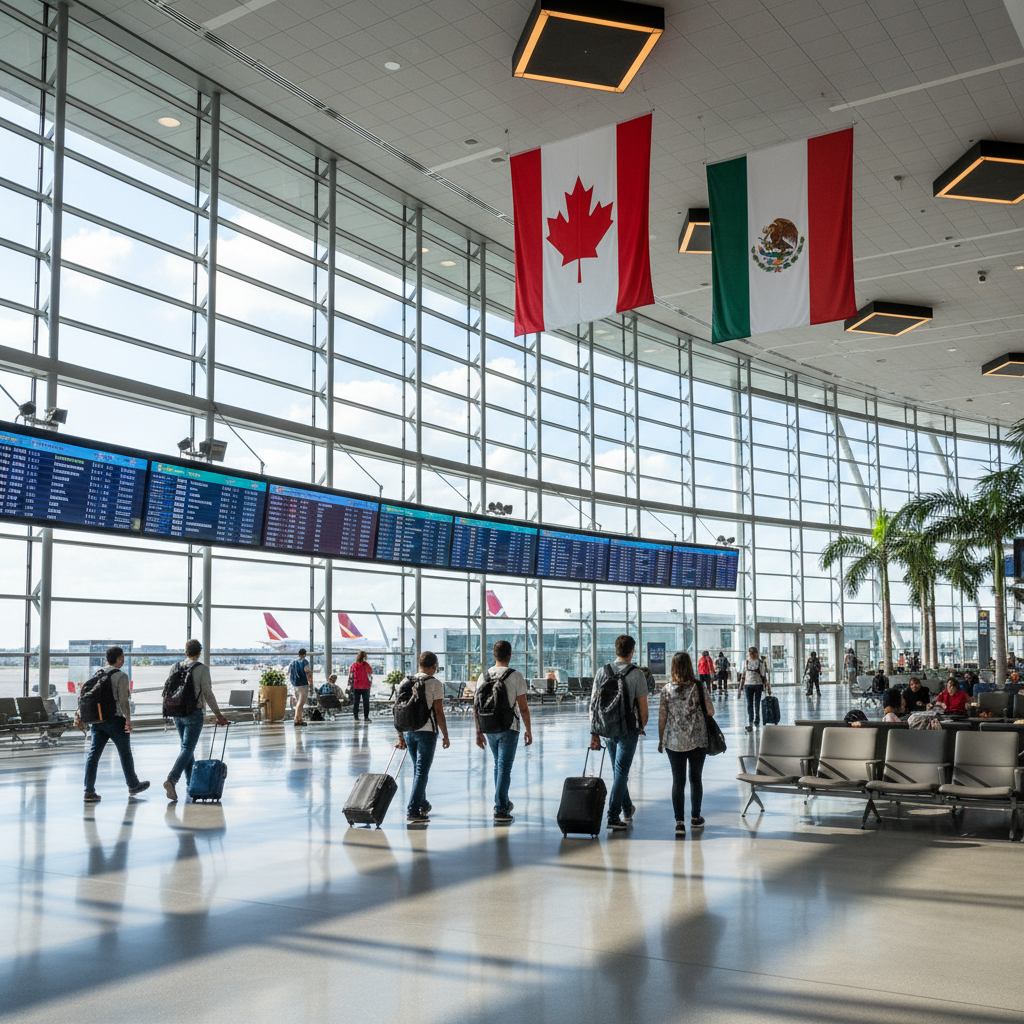
The federal government announced May 23 that it will lift current visa requirements for most Mexican citizens and replace them with a new electronic travel authorization system scheduled to take effect later this year. Under the plan, Mexican travellers with valid U.S. visas or previous Canadian visas will be eligible to apply online for streamlined entry, while stricter screening will remain for higher-risk categories.
Immigration, Refugees and Citizenship Canada officials said the policy is intended to strengthen economic and tourism ties with Mexico while responding to concerns from provinces over refugee claim volumes.
Streamlined Process for Eligible Travellers
The new electronic travel authorization system will function similarly to Canada's existing eTA program for visa-exempt countries. Mexican citizens holding valid U.S. visas or who have previously held Canadian visas will qualify for the streamlined online application process. The system is designed to process applications more quickly than traditional visa applications while maintaining security screening protocols.
Immigration officials indicated that travellers not meeting these criteria will continue to face more rigorous screening procedures. The government has not yet released specific timelines for implementation beyond "later this year" or detailed fee structures for the new authorization system. Current visa processing times for Mexican citizens can take several weeks, while eTA applications for other countries typically process within minutes or hours.
The eligibility criteria mirror those used in other countries' trusted traveller programs, with officials noting that possession of U.S. visas or previous Canadian visa history demonstrates established travel patterns and security clearances. This approach allows Canada to maintain security standards while reducing administrative burden on both applicants and processing centres.
Provincial Pushback Over Capacity Concerns
Opposition parties and some provincial leaders are pressing Ottawa for assurances that the change will not overwhelm shelter systems or immigration adjudication backlogs. The concerns stem from previous experiences with increased refugee claims that have strained municipal resources in major cities including Toronto, Montreal and Vancouver.
Conservative immigration critic Tom Kmiec questioned whether the federal government has conducted adequate impact assessments on provincial shelter systems. Quebec Premier François Legault's office issued a statement expressing concern about potential increases in asylum claims, noting the province already faces capacity challenges in its immigration processing system.
Provincial officials have raised questions about whether adequate support systems are in place to handle potential increases in asylum seekers who may arrive under the new travel rules. The federal government has not yet provided specific capacity projections or additional funding commitments to address these concerns. Toronto Mayor Olivia Chow previously cited refugee housing pressures when requesting additional federal support for the city's shelter system.
Immigration Minister Marc Miller acknowledged provincial concerns during the announcement but maintained that the targeted eligibility criteria would limit potential system impacts. His office indicated that consultations with provincial counterparts would continue through the implementation phase.
Business and Tourism Sector Support
Business groups and tourism operators, particularly in Quebec, Ontario and British Columbia, have broadly welcomed the move as a boost for trade, conferences and seasonal travel. Industry representatives have long advocated for easier travel access between Canada and Mexico, citing the countries' shared membership in the United States-Mexico-Canada Agreement.
Tourism Industry Association of Canada president Beth Potter called the announcement "a positive step toward removing barriers that have limited legitimate travel between our countries." The Canadian Chamber of Commerce noted that simplified travel procedures could increase business delegation exchanges and conference attendance from Mexico.
Tourism operators expect the policy change to increase visitor numbers from Mexico, particularly during winter months when Canadians traditionally travel south and Mexican visitors seek northern destinations. Conference and business travel sectors anticipate enhanced opportunities for cross-border collaboration and events. Pre-pandemic data showed Mexican visitors to Canada spent an average of $1,200 per trip, according to Statistics Canada tourism figures.
Hotel associations in Vancouver and Toronto have specifically noted potential benefits for business travel, citing Mexico as an underrepresented market in their international guest demographics despite strong trade relationships between the countries.
Balancing Economic and Security Priorities
The policy shift represents Ottawa's attempt to balance competing priorities of economic growth through increased travel and trade against concerns about immigration system capacity. According to the CBC report, the government views the targeted approach—focusing on travellers with existing visa credentials—as a compromise that maintains security while facilitating legitimate travel.
The timing of the announcement comes as Canada seeks to strengthen relationships with Latin American partners and diversify trade relationships beyond traditional allies. Mexico represents Canada's third-largest trading partner globally, making travel facilitation a key component of broader economic strategy. Bilateral trade between the countries reached $28 billion in 2023, with significant growth potential in sectors including energy, agriculture, and manufacturing.
Security experts have noted that the phased approach allows for system monitoring and adjustment if unexpected challenges emerge. The requirement for existing visa credentials provides a screening mechanism that officials believe will maintain border security standards while reducing processing complexity.
Implementation details, including specific application procedures, processing times, and coordination with provincial governments on capacity planning, are expected to be released in the coming months as the system launch approaches. The government has committed to providing regular updates on system performance and any necessary adjustments to eligibility criteria or processing procedures.