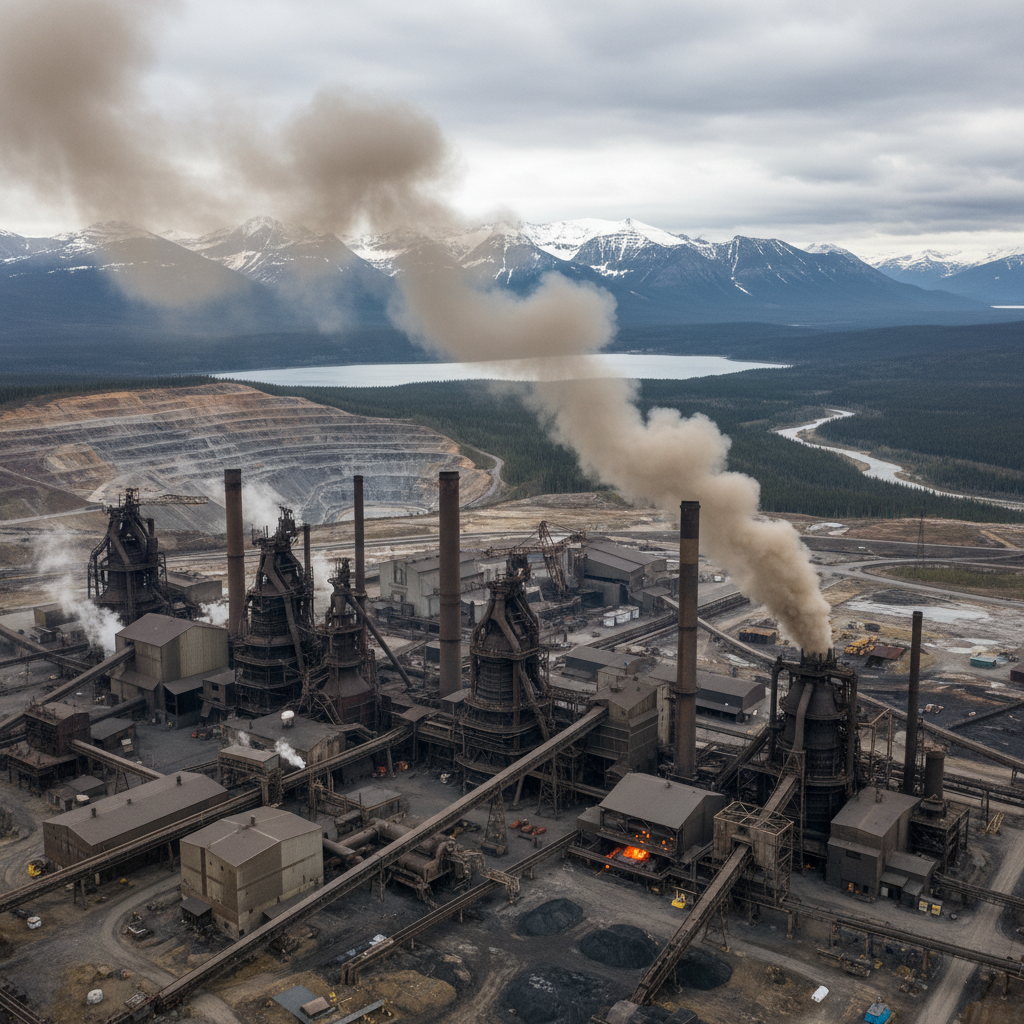
The federal government announced plans on June 6 to introduce a Canadian carbon border adjustment mechanism by 2027, applying carbon pricing to imports of steel, aluminum and cement from countries with weaker climate policies. Environment and Climate Change Minister Steven Guilbeault said the measure aims to protect Canadian industries facing rising domestic carbon costs while preventing carbon leakage to jurisdictions with less stringent environmental standards.
The proposal, detailed in a new discussion paper released by the government, would broadly mirror the European Union's carbon border adjustment mechanism and is projected to generate hundreds of millions of dollars annually once fully operational. Public consultations on the policy design will run through the summer months before draft legislation is developed.
Protecting Canadian Industry from Carbon Cost Disparities
Guilbeault emphasized that the carbon border adjustment mechanism addresses a fundamental fairness issue facing Canadian manufacturers. As domestic carbon pricing continues to rise under federal climate policy, Canadian steel and aluminum producers compete against imports from countries without equivalent carbon costs built into their production processes.
The mechanism would essentially level the playing field by imposing equivalent carbon pricing on imports from jurisdictions with weaker climate policies. This approach prevents Canadian companies from being undercut by foreign competitors who avoid carbon costs while maintaining production in high-emissions facilities.
The initial scope covers steel, aluminum and cement—three sectors identified as particularly vulnerable to carbon leakage due to their energy-intensive production processes and exposure to international competition. These industries have lobbied extensively for border carbon adjustments as domestic carbon pricing has increased their operational costs relative to foreign competitors.
Business Groups Raise Trade and Compliance Concerns
Business organizations have expressed reservations about the proposal, warning of potential trade tensions with key partners and significant compliance costs for importers. The mechanism requires detailed tracking of carbon content in imported goods, creating administrative burdens for companies that source materials internationally.
Trade relationships could face strain as the policy effectively penalizes countries with less ambitious climate policies. Major trading partners including the United States, China and Mexico may view the mechanism as protectionist despite its environmental justification.
Compliance costs represent another significant concern for businesses. Companies will need to verify the carbon content of imports and navigate potentially complex certification processes, particularly for goods from countries without established carbon pricing systems.
Environmental Groups Call for Broader Coverage
Environmental advocates have criticized the initial sector list as insufficient to meet Canada's climate commitments. They argue that limiting coverage to steel, aluminum and cement leaves significant gaps in addressing carbon leakage across other high-emissions industries.
The narrow scope means other carbon-intensive imports such as chemicals, fertilizers and certain manufactured goods would remain exempt from border carbon adjustments. Environmental groups contend this approach undermines the policy's effectiveness in driving global emissions reductions.
Some climate policy experts suggest the government chose a cautious initial approach to minimize trade disputes while establishing the administrative framework. Expanding coverage to additional sectors could follow once the mechanism proves operational.
Summer Consultations to Shape Final Design
The government will conduct public consultations through the summer to determine key implementation details including which specific products and countries will face the carbon border adjustments. Revenue allocation represents another critical decision, with options ranging from general government revenue to targeted support for domestic clean technology development.
Technical questions around carbon content measurement and verification will require resolution before the 2027 implementation date. The government must establish systems for assessing the carbon intensity of imports from countries with varying levels of climate policy sophistication.
According to the CBC report, draft legislation will follow the consultation period, allowing Parliament to debate the mechanism before its scheduled 2027 launch. The timeline aligns with similar policies in the European Union, potentially facilitating coordination between the two carbon border adjustment systems.
The mechanism's success will largely depend on international cooperation and the government's ability to balance environmental objectives with trade relationship management. Early implementation challenges could influence whether Canada expands the policy to additional sectors or maintains the current limited scope.