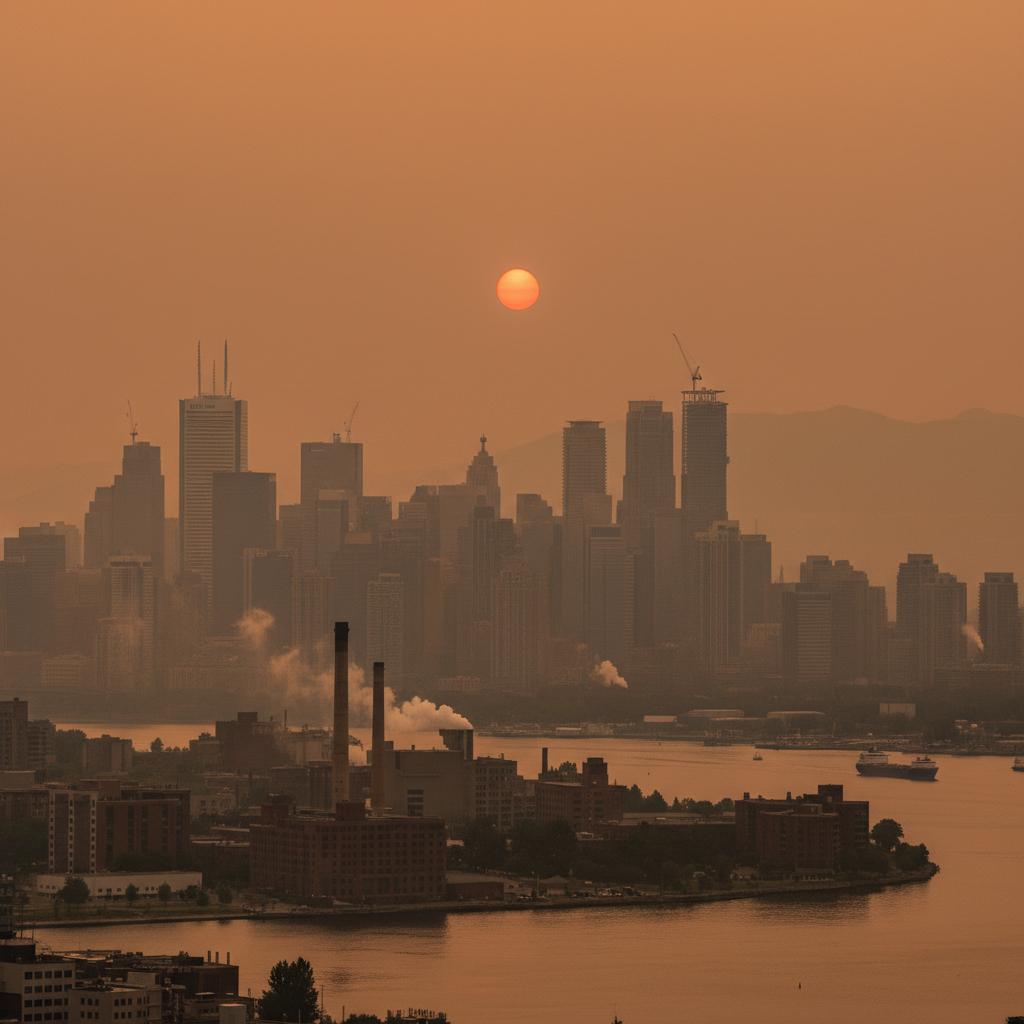
Environment and Climate Change Canada issued special air quality statements and smog warnings across Ontario, Quebec and parts of Western Canada between June 20 and June 24, as wildfire smoke drove Air Quality Health Index readings into dangerous territory for vulnerable populations.
Cities including Toronto, Ottawa and Montreal experienced hazy skies and the distinct smell of burning as AQHI levels climbed to 7 or higher—a threshold that signals elevated health risk for children, seniors and anyone with heart or lung conditions. The smoky conditions forced many residents indoors and prompted widespread health advisories from federal and provincial authorities.
Health officials urge indoor precautions
Health authorities across affected provinces recommended that vulnerable residents limit outdoor activities during peak smoke periods and consider using high-quality masks when venturing outside. Officials also advised using indoor air filtration systems where possible and monitoring for symptoms such as coughing, shortness of breath and eye irritation.
The guidance particularly emphasised precautions for children and seniors, who face heightened risks from poor air quality. Parents were advised to keep young children indoors during the worst conditions, while care facilities for elderly residents implemented enhanced air filtration protocols.
Provincial health departments distributed specific recommendations for managing indoor air quality, including keeping windows and doors closed, running air conditioners on recirculate settings, and avoiding activities that create additional indoor pollution such as smoking or using candles. Public health units also established cooling centres with enhanced air filtration for residents without adequate home ventilation systems.
AQHI readings signal widespread impact
The Air Quality Health Index, which measures pollution levels on a scale from 1 to 10-plus, registered concerning readings across major population centres. Toronto, Ottawa and Montreal all recorded AQHI levels of 7 or higher during the four-day period, placing millions of Canadians under health advisories.
The index serves as a key public health tool, with readings above 7 indicating that even healthy adults may experience discomfort during outdoor activities. Readings above 10 signal very high risk conditions that can affect the general population.
Several smaller communities in northern Ontario and Quebec experienced even more severe conditions, with some areas recording AQHI readings exceeding 10. These extreme readings prompted local authorities to cancel outdoor events and modify school activities to keep students indoors during recess and physical education periods.
Climate change extends wildfire seasons
Federal and provincial agencies highlighted the connection between the recurring smoke events and climate change, noting that Canadian communities are experiencing longer and more intense wildfire seasons. This trend increases the likelihood that smoke from distant fires will repeatedly impact air quality in populated areas far from the blazes themselves.
Fire crews continue battling multiple fires across the country, with officials warning that intermittent smoke and poor air quality could persist depending on shifting wind patterns and weather conditions. The current fire season has already produced significantly more smoke events compared to historical averages, with meteorologists attributing the pattern to persistent high-pressure systems that trap smoke close to ground level.
Climate scientists noted that the frequency of these widespread smoke events has doubled over the past decade, with urban centres now experiencing poor air quality days that previously occurred only in communities directly adjacent to active fires. According to CBC News reporting, this represents a fundamental shift in how Canadian cities must prepare for and respond to seasonal air quality challenges.
Ongoing monitoring as fire season continues
Environment Canada meteorologists indicated that smoke conditions would likely fluctuate throughout the summer months as wind patterns shift and new fires develop. The agency committed to maintaining regular air quality monitoring and issuing timely public advisories as conditions change.
Provincial health departments advised residents to bookmark local AQHI readings and develop household plans for managing poor air quality days, including identifying indoor spaces with good air filtration and ensuring adequate supplies of any necessary medications for respiratory conditions.
Emergency management officials are reviewing protocols for extended poor air quality periods, recognising that multi-day smoke events may become more common. This includes evaluating the capacity of public buildings to serve as clean air shelters and ensuring adequate supplies of N95 masks for distribution during severe episodes.
The next critical period for air quality monitoring will come with anticipated weather pattern changes in early July, when shifting winds could either clear existing smoke or draw in emissions from new fire activity across Western Canada.